
Christian Budgeting Made Simple: Live, Give, Owe, Grow Explained

The Live-Give-Owe-Grow (LGOG) model from Ron Blue Institute simplifies biblical financial stewardship into four uses of money: living expenses, giving, obligations, and saving. This framework helps Christians prioritize simultaneously while maintaining balance in managing money for day-to-day life.
Embrace Biblical Simplicity
Money decisions often feel overwhelming in today's world, but the LGOG model cuts through the complexity. Developed by Christian financial expert Ron Blue, founder of the Ron Blue Institute, this pie chart approach reminds us there are only four things we can do with every dollar: live on it, give it away, owe it (debt or taxes), or grow it through saving and investing. Note that this framework is not sequential because priorities happen all at once, reflecting life's simultaneous demands.
This model transforms behavior by shifting mindsets first. Blue emphasizes that God owns it all, so we're stewards, not owners. For Christians, it's rooted in principles like contentment (Philippians 4:11-13) and generosity (2 Corinthians 9:7).
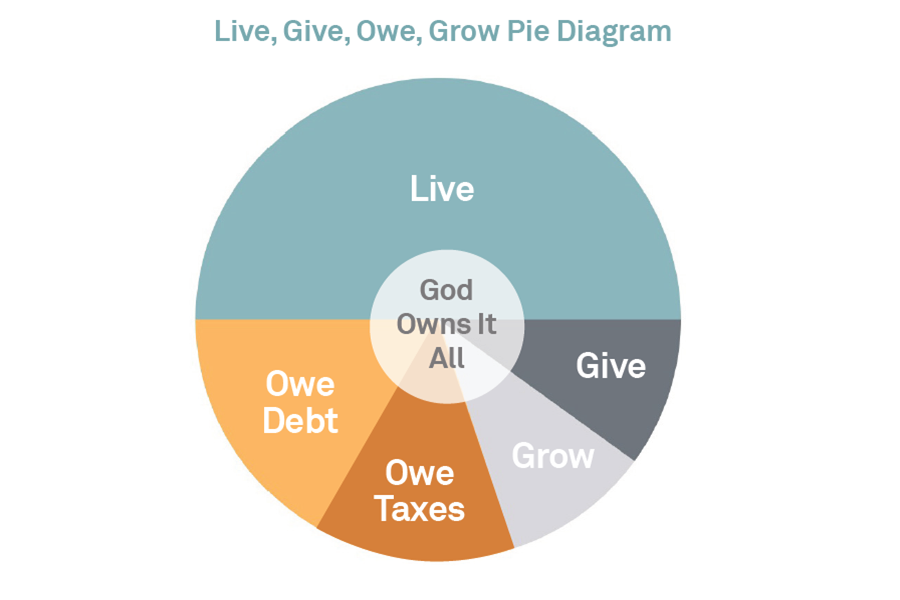
LGOG Diagram from Ron Blue Institute (ronblueinstitute.com).
Live: Contentment in Daily Provision
The "Live" slice covers essentials like housing, food, utilities, transportation, and modest entertainment. This is your lifestyle pie. It's often the largest initially but should reflect stewardship, not excess. Blue teaches practicing care, contentment, and celebration, as money is a tool for God's glory (Acts 4:32-35).
Many Christians live paycheck-to-paycheck, but the goal is margin. As you make wise money decisions and your wealth grows over time, this slice of the pie should ideally shrink in proportion to the other categories.
Ask yourself: Does this purchase honor God and provide for my family without bondage? As income rises, resist lifestyle inflation by capping "Live" at a specific percentage (for example, 60-70%) to free resources elsewhere.
Give: Joyful Kingdom Impact
Giving is the ultimate productive use with eternal value through tithing, church support, missions, or helping the needy. Blue urges generosity first, as in Malachi 3:10: "Bring the full tithe into the storehouse... and thereby put me to the test." It's cheerful and planned, not residual.
We encourage you to aim for 10% of income (a tithe) and separate it upfront to avoid consumption. Stories abound of families ramping up giving after adopting the model as they experience the fruits of financial discipline and God's provision. Productive giving furthers God's work, contrasting consumptive spending.
Owe: Freedom from Bondage
"Owe" splits into debt and taxes. Debt should be minimized, as indicated in Proverbs 22:7, "The borrower is the slave of the lender." Paying down consumer debt releases pressure from your budget and adds margin for giving and living. One way to tackle them is to list debts smallest to largest, pay minimums plus extra on the smallest.
How about taxes? Pay them gratefully as they are due to abundant provision. By implementing smart strategies such as retirement contributions and charitable gifts, we can keep more of our income for debt-pay off, modest living, and generosity.
Grow: Future Margin and Wisdom
"Grow" builds liquidity via emergency funds, retirement, investments. This is where we prepare like the ant (Proverbs 6:6-8). It creates flexibility, but beware of hoarding like the rich fool (Luke 12:16-21).
Start with 3-6 months' expenses in savings, and contribute to your workplace retirement plan sufficiently to earn your employer’s match (if available). Continue on to long-term goals such as retirement and college. Invest your assets in biblically-responsible funds that balance returns with robust screening practices. If you need help aligning your portfolio in this manner, reach out to one of our advisors to get started today.
As your short-term and long-term savings grow, consider what the appropriate “finish line” is for your family and taper the "Grow" to boost giving. The pie ensures balance as over-growing starves other slices.
Apply the Model Today
I usually recommend doing this when you do your taxes each year, because then you have up-to-date tax numbers and it's easier to remember.
Start your pie by listing last year's income, subtract giving, debt payments, taxes, and savings to find "Live." Then chart those percentages to understand your current situation. After that, set targets for the coming year (e.g., I want to give 11% this year, or I want to limit my living expenses to 60%).
These numbers and goals are not set in stone. Review them annually with a spouse or accountability partner to ensure you are heading in the right direction.
Blue's timeless wisdom rooted in biblical truth (spend less, avoid debt, build margin, set goals, give generously) results in financial peace and eternal impact. Remember God owns it all, so let’s steward wisely for His glory.
Remember, don’t hesitate to reach out to one of our advisors if you would like guidance in stewarding your finances well.
Subscribe to get our content delivered straight to your inbox!
